Steampunk Cat Backgrounds for Covers 5: A Designer's Guide
Every creative project has a story to tell, but finding the right visual language can be a challenge. You need more than just a pretty picture; you need a design asset that carries personality, sets a mood, and instantly communicates a specific aesthetic. This is where a resource like Steampunk Cat Backgrounds for Covers 5 becomes an invaluable part of a designer's toolkit. It's a digital collection that merges the intricate, brass-and-gears world of steampunk with the enigmatic grace of cats, creating a unique and versatile foundation for a wide range of projects.
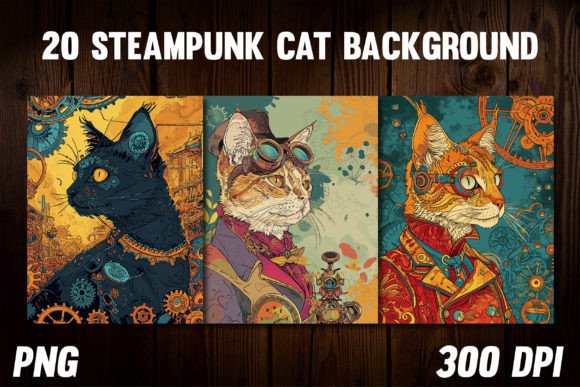
At its core, this collection is about a specific visual fusion. It’s not just about cats wearing goggles. The backgrounds are intricate tapestries where mechanical gears mesh with organic feline forms, where clockwork butterflies flit around curious whiskers, and where Victorian-era textures provide a rich, atmospheric depth. The overall appeal lies in this detailed, whimsical, and slightly mysterious personality. It avoids the dark, gritty side of steampunk, leaning instead into a more fantastical and enchanting realm. For a designer, this means you're not just buying images; you're acquiring a pre-built world with a strong, consistent visual identity.
Finding the Perfect Project Fit
The versatility of the Steampunk Cat Backgrounds for Covers 5 collection is one of its greatest strengths. It functions as a premium font for visual projects, providing a strong stylistic foundation. In publishing, these backgrounds are a natural fit for book covers, especially within the fantasy, young adult, or steampunk genres. Imagine a cover for a novel about a clockwork detective and their feline companion; the background does half the storytelling before a single word is read. It sets the tone instantly, promising an adventure that is both magical and mechanical.
Beyond book covers, the applications are surprisingly broad. Consider these practical uses:
- Editorial Design: Use a subtle, desaturated version as a background texture for a magazine feature on alternative history or fantasy art.
- Scrapbooking and DIY Projects: Create one-of-a-kind journals, greeting cards, or invitations for a themed party. The intricate details provide a stunning focal point.
- Brand Identity: For a niche business—like a cat-themed coffee shop, a custom jewelry maker, or a game developer—these backgrounds can inform the entire brand identity. They can be adapted for website headers, social media graphics, and even packaging design for a truly memorable unboxing experience.
- Digital Content: Bloggers and content creators can use these as unique backgrounds for YouTube thumbnails, podcast art, or Instagram stories to stand out in a crowded feed.
The key is recognizing its role as a creative font in visual form. It’s a display asset, designed to grab attention and establish a mood, rather than to be a subtle, neutral element.
The Art of Integration: Making It Work for You
Using a highly stylized asset like this effectively requires a thoughtful approach. Simply dropping it onto a project can lead to visual chaos. As a designer, your job is to integrate it, not just place it. The first consideration is readability. Because the backgrounds are detailed, any text overlaid on them must have strong contrast. This often means using a solid color block, a semi-transparent overlay, or choosing a typeface that is bold and clear. A simple, clean sans serif font often works best, providing a modern counterpoint to the vintage, ornate background. A classic serif font can also work if it has a strong weight, but a delicate script font might get lost in the details.
This leads to the concept of font pairing. The goal is to create a dialogue between the background, the primary text, and any secondary text. You might pair a bold, industrial-looking display font for the title with a clean, readable modern typography choice for the body copy. The Steampunk Cat Backgrounds for Covers 5 provide the atmosphere, while your chosen typography provides the structure and hierarchy. This thoughtful combination is what separates amateur work from professional design assets.
Before committing to a project, it’s wise to evaluate the fit. Does the whimsical, mechanical nature of the collection align with the project's core message? While perfect for a fantasy novel or a quirky brand, it would be an odd choice for a corporate financial report. Test different images from the collection to see which one best suits your layout. Review the included styles—are there lighter and darker options? Are some more focused on gears while others highlight the cats? Choosing the right variant is just as important as choosing the right font. Finally, always verify the licensing. For any commercial use, from a client's book cover to your own product packaging, ensure the license permits it. This due diligence is a hallmark of a professional and protects both you and your client.