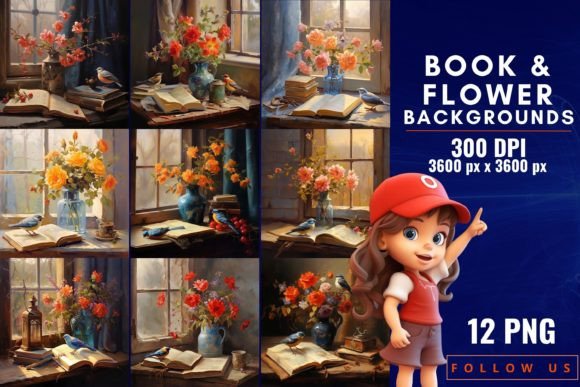
Book & Flower Backgrounds: Where Literature Meets Nature
There's a particular kind of magic that happens when you crack open an old book and place it beside a vase of fresh flowers. The scent of aged paper mingles with the fragrance of blooms, and suddenly you're transported to a place where wisdom and beauty exist in perfect harmony. That's exactly the feeling captured in this collection of 12 Book & Flower Backgrounds—a visual pairing that speaks to anyone who appreciates both the intellectual depth of literature and the organic grace of botanicals.
Understanding the Visual Language of These Backgrounds
Each background in this collection tells its own story. Think weathered book spines resting against soft peonies, open pages scattered with pressed lavender, or vintage hardcovers nestled among climbing roses. The visual personality here leans toward romantic sophistication—not overly sweet, but warmly inviting. There's a handcrafted quality to these compositions that avoids feeling sterile or overly polished.
The color palette tends toward muted, natural tones: dusty pinks, sage greens, warm creams, and the deep burgundy of aged leather bindings. This isn't the bright, saturated aesthetic of modern social media—it's something more timeless. The backgrounds work because they balance texture and space. You'll find areas of rich detail where petals overlap with page edges, alongside cleaner zones that leave room for text overlays or design elements.
From a design perspective, these backgrounds function much like a well-chosen serif font paired with delicate floral illustrations. They carry personality without overwhelming your content. The resolution quality ensures that even the fine details—individual flower stamens, the grain of paper fibers, the subtle shadow beneath a book spine—remain crisp whether viewed on screen or printed.
Where These Backgrounds Truly Shine
The real value of Book & Flower Backgrounds lies in their versatility across different creative contexts. Let me walk you through where I've seen this style work exceptionally well.
For authors and publishers: These backgrounds make stunning book launch graphics, author website banners, and newsletter headers. If you're promoting a novel, memoir, or poetry collection, a background that literally places books among flowers communicates the emotional experience of reading without a single word of copy. Use them for Instagram posts announcing new releases, or as chapter header images in digital editions.
For bloggers and content creators: Lifestyle, wellness, and personal development bloggers will find these backgrounds particularly useful. They photograph beautifully when used as flat lay bases for styled product shots, and they work equally well as header images for blog posts about self-care routines, reading lists, or creative journaling. The visual hierarchy these backgrounds create—where the eye naturally moves between the structured geometry of books and the organic curves of flowers—draws readers into your content.
For small business owners and entrepreneurs: If your brand identity leans toward artisanal, handmade, or thoughtfully curated products, these backgrounds add immediate warmth to your social media graphics and marketing materials. A candle maker, a tea company, a boutique stationery shop—these businesses all benefit from imagery that suggests craftsmanship and care.
For designers and creative professionals: Think beyond the obvious applications. These backgrounds work beautifully in packaging design for products like bookmarks, candles, teas, or bath products. They're excellent for editorial design projects—magazine layouts, recipe cards, event invitations. Wedding stationery designers will appreciate the romantic yet sophisticated tone these backgrounds set for save-the-dates, programs, and thank-you cards.
Practical Guidance for Working With These Assets
Before incorporating Book & Flower Backgrounds into your projects, consider these practical recommendations.
Evaluate contrast and readability first. Because these backgrounds feature organic textures and varying tones, text placement requires thought. Place lighter text over darker areas of the background, or use a semi-transparent overlay to ensure your message remains legible. Test your designs at the actual size they'll be viewed—what looks readable on a 27-inch monitor might struggle on a mobile screen.
Think about your font pairings carefully. These backgrounds pair naturally with serif fonts that echo the literary theme—think elegant typefaces with moderate contrast and refined details. A clean sans serif font can also work beautifully, creating a modern counterpoint to the vintage botanical aesthetic. Avoid overly decorative script fonts or handwritten fonts that might compete with the visual complexity already present in the background.
Consider your project's overall tone. These backgrounds communicate warmth, intelligence, and natural beauty. If your brand or project calls for something edgy, minimal, or corporate, they might feel incongruent. But if your audience values authenticity, creativity, and a slower, more intentional approach to life and work, you've found a perfect match.
Test across different applications. Download a sample and mock it up in your actual use case before committing. Place your logo over it. Try it as a presentation slide background. Print a test page. This hands-on evaluation tells you more than any description ever could about whether a particular background serves your specific needs.
Review licensing terms for your intended use. Whether you're creating personal projects or commercial work, always confirm that the licensing covers your application. Most collections like this distinguish between personal and commercial use, and understanding those boundaries upfront saves headaches later.
The Broader Appeal: Why This Style Endures
In a digital landscape saturated with geometric patterns, gradient blobs, and abstract shapes, Book & Flower Backgrounds offer something refreshingly grounded. They tap into a visual vocabulary that people instinctively understand—books represent knowledge, stories, and imagination, while flowers symbolize growth, beauty, and the passage of time. Together, they create imagery that feels both intellectually stimulating and emotionally comforting.
This isn't a trend-dependent aesthetic. Unlike design styles that spike in popularity and fade within a year, the book-and-flower combination has appeared in art, design, and decoration for centuries. It appears in Dutch still life paintings, Victorian wallpaper patterns, and contemporary brand identity work alike. Investing in these backgrounds means choosing design assets with genuine staying power.
For anyone building a visual presence—whether that's a personal blog, a growing business, or a creative portfolio—these backgrounds provide a foundation that communicates taste, thoughtfulness, and an appreciation for beauty that doesn't shout but whispers. And sometimes, that quiet confidence is exactly what captures attention.