Neuron Cell Backgrounds: A Cosmic Canvas for Creatives
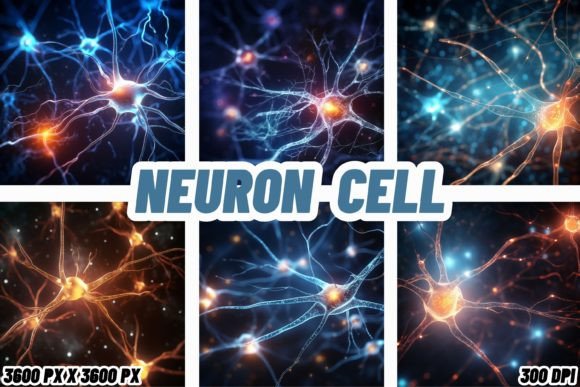
There's a certain magic in looking up at the night sky and then looking down through a microscope. Both reveal vast, intricate networks of light and connection. The Neuron Cell Backgrounds collection lives in that fascinating intersection, blending the microscopic elegance of our neural structures with the grand, celestial beauty of a galaxy. It’s a set of 12 high-definition images designed not just to decorate a screen, but to inspire a different kind of thinking.
Imagine dendrites and axons rendered as delicate, luminous threads, not against a sterile lab backdrop, but swirling within the deep blues and purples of a cosmic nebula. This isn't scientific illustration in the traditional sense; it's a form of modern typography applied to imagery. The "typeface" here is the neuron itself—its branching patterns, its synaptic connections—set against the "canvas" of space. The result is a visual language that speaks of complexity, intelligence, and interconnectedness. For a designer, this is more than a pretty picture; it's a source of creative font inspiration, a lesson in how organic forms can create dynamic visual hierarchy and rhythm.
Where Science Meets the Screen: Practical Applications
The true value of these backgrounds lies in their versatility. They are design assets that can elevate a project from ordinary to memorable. As a brand strategist, I see immediate applications for businesses in the wellness, tech, education, and creative sectors. A startup focused on mindfulness apps could use a subtle, calming neuron-galaxy image as a website hero section, instantly communicating a brand identity rooted in mental clarity and expansive thinking. The imagery does more than fill space; it helps shape brand perception.
For content creators and bloggers, these HD backgrounds solve a common problem: finding visuals that are both unique and relevant. Use them as the foundation for social media graphics, especially for posts about learning, creativity, or personal development. They make exceptional Zoom or video call backgrounds, adding a layer of professionalism and intellectual flair without being distracting. In editorial design, a muted version could serve as a subtle texture for a magazine layout on neuroscience or innovation, enhancing the story without competing with the text.
Think about packaging design for a premium, artisanal coffee brand or a line of nootropic supplements. A carefully selected neuron background, perhaps used as a liner or a sleeve detail, can convey a sense of sophisticated craft and enhanced experience. It’s a subtle nod to the product's effect on the mind, wrapped in modern typography principles where the image itself communicates a core message.
Integrating the Neural Aesthetic: A Designer's Guide
Choosing to use such a distinctive visual element requires some thought. It’s not a neutral sans serif font; it’s a statement piece. Here’s how to approach it effectively.
- Evaluate the Project's Voice: These backgrounds carry a personality that is thoughtful, slightly futuristic, and artistic. They are perfect for projects aiming to evoke wonder, intelligence, or creativity. They might be less suited for a project requiring a purely rustic, handcrafted, or minimalist corporate feel. Always ask: does this visual language align with the project's core message?
- Mastering Font Pairing: Because the backgrounds are visually complex, your typography needs to provide clarity. Pair them with clean, highly legible typefaces. A strong serif font for headlines can add a touch of authority and tradition, grounding the futuristic imagery. Alternatively, a geometric sans serif font will maintain a sleek, modern look. The key is contrast and readability; ensure your text has ample negative space or a semi-transparent overlay to stand out.
- Consider Readability First: This is non-negotiable. If you're using a neuron background for a website header or a presentation slide, test your text on multiple screens. Use tools to check color contrast ratios. Sometimes, using the background at a lower opacity or applying a subtle gradient overlay can preserve the aesthetic while making your foreground content pop.
- Think in Systems, Not Just Images: With 12 variations, you have a mini-library. Use one style for your primary branding, another for secondary materials, and a third for special campaigns. This builds brand consistency while allowing for visual variety. It’s similar to selecting a premium font family with multiple weights and styles—you’re creating a cohesive system.
- Licensing for Commercial Confidence: As with any commercial font or asset, clarify the licensing. Ensure the terms allow for your intended use, whether it's for client work, merchandise, or digital products. This protects your investment and your client's project.
In the end, the Neuron Cell Backgrounds are more than just digital wallpaper. They are a bridge between science and art, a tool for building brand identity